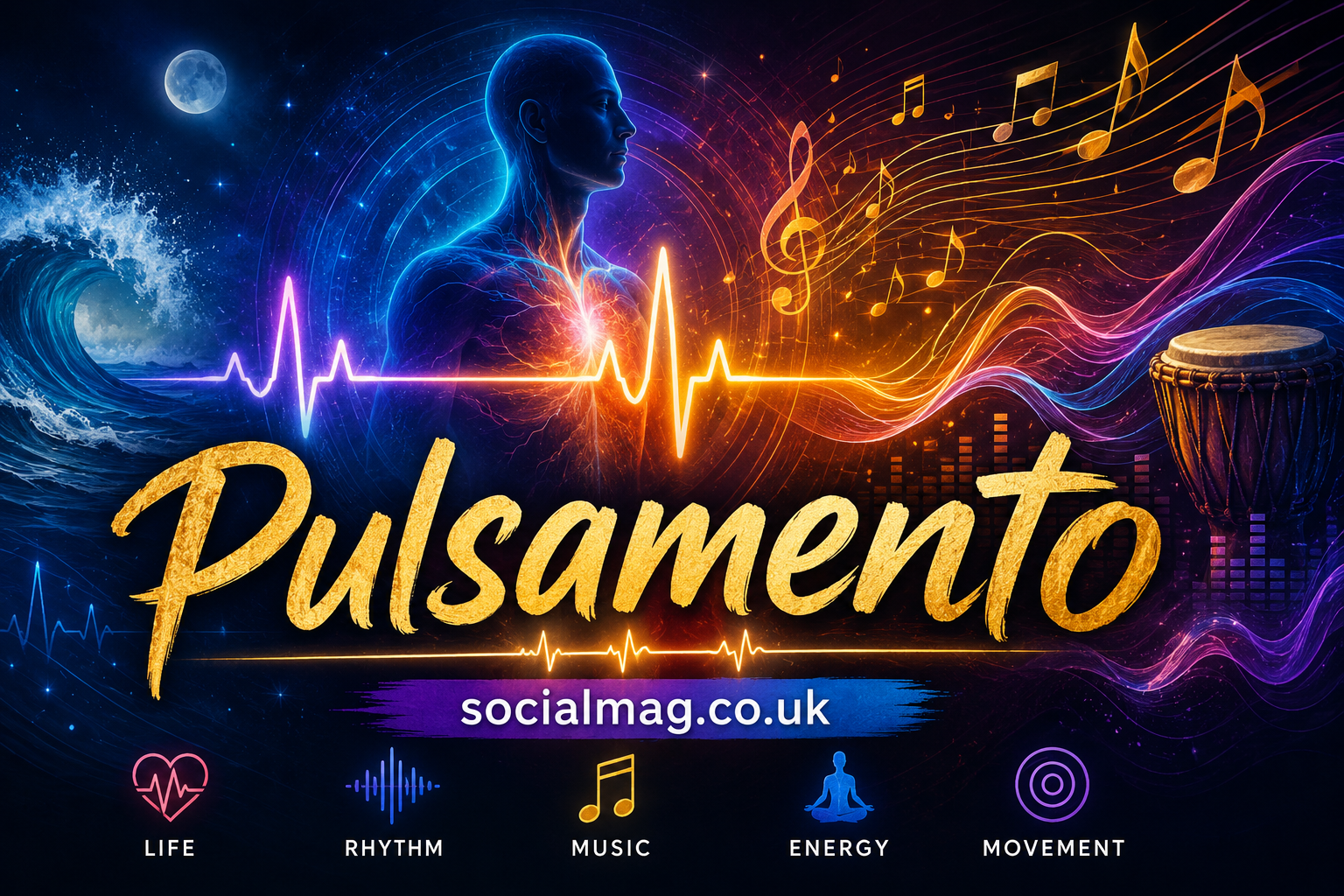
The pulsamento generally refers to a pulsation, pulse, rhythmic beating, or repetitive movement. It originates from particularly Italian and Portuguese influences, where words related to “pulse” describe rhythmic motion or vibration.
In simple terms, pulsamento can describe:
- A heartbeat
- A rhythmic pulse
- Vibrations occurring at regular intervals
- Musical rhythm or tempo
- Repetitive energetic movement
- Emotional intensity expressed through rhythm
The word often evokes the image of something alive, dynamic, and constantly moving.
Featured Snippet Answer
Pulsamento means a pulse, pulsation, rhythmic beating, or recurring vibration. It is commonly associated with heartbeats, music, rhythm, movement, and energetic flow.
The Origins of Pulsamento
Understanding pulsamento becomes easier when examining its linguistic roots.
The word derives from the Latin root pulsare, meaning:
- To strike
- To beat
- To push repeatedly
- To pulse
Over centuries, many languages developed similar terms from this root. For example:
- Pulse (English)
- Pulsation (English)
- Pulsar (Spanish)
- Pulsazione (Italian)
- Pulsação (Portuguese)
Pulsamento emerged as a descriptive term that conveys continuous rhythmic action. The concept remained closely connected to biological, musical, and emotional rhythms throughout its evolution.
Why Pulsamento Feels So Powerful
Certain words resonate because they connect directly to human experience. Pulsamento belongs to this category.
Every person experiences rhythm daily:
- The beating of the heart
- The flow of breathing
- Walking patterns
- Musical rhythms
- Emotional highs and lows
Because pulsamento symbolizes these natural cycles, it often feels poetic and emotionally charged.
When people hear the word, they frequently associate it with life itself. After all, a pulse is one of the most universal signs of existence.
Pulsamento in Music
One of the most common contexts for pulsamento is music.
Music relies on rhythm. Without rhythm, melodies lose structure and emotional impact. Pulsamento can describe the underlying pulse that guides a musical composition.
The Foundation of Musical Timing
Every song contains a basic pulse that listeners naturally follow. Whether tapping a foot or nodding a head, people respond instinctively to rhythmic patterns.
Pulsamento in music may refer to:
- Beat structure
- Tempo consistency
- Rhythmic movement
- Dynamic flow
- Musical energy
Professional musicians often think about pulse as the invisible framework holding a piece together.
Emotional Impact in Music
A strong pulsamento can dramatically affect how music feels.
For example:
- Slow pulsamento creates calmness.
- Moderate pulsamento feels balanced.
- Fast pulsamento generates excitement.
- Irregular pulsamento introduces tension.
This relationship between pulse and emotion explains why rhythm plays such a critical role in musical storytelling.
Pulsamento and the Human Heart
Perhaps the most direct association with pulsamento is the human heartbeat.
The heart creates a natural rhythm that sustains life. Each contraction generates a pulse that circulates blood throughout the body.
This biological process serves as one of the most recognizable examples of pulsamento.
Why Heart Rhythm Matters
A healthy heartbeat typically demonstrates:
- Consistency
- Stability
- Balance
- Adaptability
Doctors often evaluate pulse patterns to assess overall health. Changes in rhythm can reveal important information about physical condition and wellbeing.
Because of this connection, pulsamento frequently symbolizes vitality and life force.
Pulsamento in Literature and Poetry
Writers often choose words that carry emotional depth. Pulsamento fits perfectly within poetic and literary expression.
Authors may use the term metaphorically to describe:
- Passion
- Desire
- Love
- Fear
- Hope
- Determination
For example, a novelist might describe the pulsamento of a city at night, referring to the energy flowing through streets, lights, and people.
Similarly, poets use rhythmic language to mirror emotional pulsamento within their work.
The Symbolism of Pulsamento
Beyond its literal meanings, pulsamento functions as a powerful symbol.
Life
A pulse indicates life. Therefore, pulsamento often symbolizes existence and vitality.
Energy
Moving energy frequently appears as rhythmic motion. Pulsamento captures this concept naturally.
Connection
People connect through shared rhythms, including conversation, music, and social interaction.
Transformation
Rhythmic movement suggests progress and change. Pulsamento can therefore symbolize personal growth and development.
Pulsamento in Art and Design
Visual artists frequently explore rhythm through shapes, colors, and patterns.
Although paintings do not physically move, they can create a sensation of pulsamento through visual repetition.
Examples include:
- Repeating geometric shapes
- Expanding circles
- Flowing patterns
- Dynamic color transitions
- Abstract rhythmic compositions
These techniques help viewers experience movement even when looking at static artwork.
The Psychological Side of Pulsamento
Human brains naturally respond to rhythm.
Research in psychology has shown that rhythmic patterns influence:
- Mood
- Focus
- Memory
- Relaxation
- Motivation
This explains why people enjoy rhythmic activities such as:
- Dancing
- Listening to music
- Running
- Meditation
- Drumming
Pulsamento represents the repetitive structure that helps organize both thought and behavior.
How Pulsamento Relates to Everyday Life
Many people assume pulsamento only belongs to music or medicine. In reality, it appears throughout daily experiences.
Morning Routines
Daily habits often follow predictable rhythms.
Work Cycles
Productivity naturally rises and falls throughout the day.
Conversations
Human speech contains rhythm and pacing.
Nature
Natural environments display countless examples of pulsamento, including waves, seasons, and weather patterns.
Recognizing these rhythms can improve awareness and appreciation of everyday life.
Cultural Perspectives on Rhythm and Pulsamento
Different cultures place varying levels of importance on rhythm.
In many societies, rhythmic practices serve essential roles in:
- Celebrations
- Religious ceremonies
- Dance traditions
- Storytelling
- Community gatherings
The concept of pulsamento aligns closely with these cultural expressions because rhythm often acts as a universal language.
Regardless of language barriers, people understand and respond to rhythmic patterns.
Why Is Pulsamento Trending Online?
Interest in pulsamento has increased because people frequently encounter unusual words through:
- Social media
- Music platforms
- Language-learning resources
- Online dictionaries
- Creative writing communities
Curiosity drives many searches. Users often want to know whether pulsamento refers to music, medicine, language, or art.
The answer is that it can relate to all of these fields, depending on context.
Common Misunderstandings About Pulsamento
It Is Not Just a Medical Term
While connected to pulse and heartbeat, pulsamento extends beyond medicine.
It Is Not Limited to Music
Music represents only one application of the concept.
It Can Be Metaphorical
Writers frequently use pulsamento symbolically rather than literally.
Meaning Depends on Context
The exact interpretation changes depending on where the word appears.
Examples of Pulsamento in Real-Life Situations
To better understand the term, consider these examples:
- The pulsamento of a drumbeat during a live concert.
- The pulsamento of a healthy heartbeat during exercise.
- The pulsamento of city life during rush hour.
- The pulsamento of ocean waves reaching the shore.
- The pulsamento of excitement before a major event.
Each example reflects rhythmic energy and continuous movement.
The Universal Appeal of Pulsamento
What makes pulsamento fascinating is its universality.
Every person experiences rhythm in some form. From birth onward, humans live within patterns of movement, breathing, emotion, and interaction.
The word captures these experiences in a single concept.
That broad applicability explains why pulsamento feels meaningful even to people encountering it for the first time.
The Future Relevance of Pulsamento
As interest in language, creativity, wellness, and music continues growing, pulsamento remains relevant.
Modern discussions around mindfulness, emotional awareness, artistic expression, and personal growth frequently emphasize rhythm and balance.
Pulsamento serves as an ideal term for describing these interconnected experiences.
Its flexibility allows it to remain useful across multiple disciplines while maintaining a rich symbolic meaning.
Conclusion
Pulsamento is much more than a simple word. It represents pulse, rhythm, movement, energy, and life itself. Whether discussed in music, medicine, literature, psychology, or art, the concept reflects the patterns that shape human existence.
From the heartbeat sustaining life to the rhythm driving a favorite song, pulsamento appears everywhere. Its enduring appeal comes from its ability to describe something deeply familiar yet profoundly meaningful: the ongoing rhythm that connects us to the world around us.
Frequently Asked Questions (FAQs)
1. What does pulsamento mean?
Pulsamento generally means pulsation, pulse, rhythmic beating, or recurring vibration.
2. Is pulsamento related to the heartbeat?
Yes. The term is often associated with heart rhythm and biological pulse patterns.
3. Is pulsamento used in music?
Absolutely. In music, pulsamento can describe the underlying beat, pulse, or rhythmic structure of a composition.
4. What language does pulsamento come from?
The word has roots connected to Latin and appears in contexts influenced by Italian and Portuguese language traditions.
5. Can pulsamento be used metaphorically?
Yes. Writers and artists often use it symbolically to describe energy, emotion, passion, and movement.
Read also: Renee Rapp Height How Tall Is the Singer and Actress?